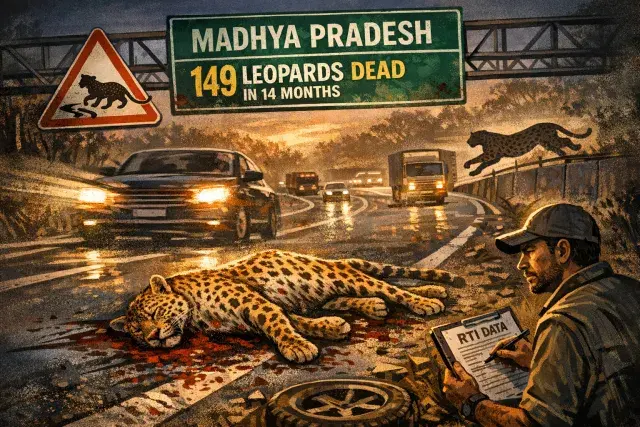
Madhya Pradesh Loses 149 Leopards in 14 Months as Road Deaths Surge
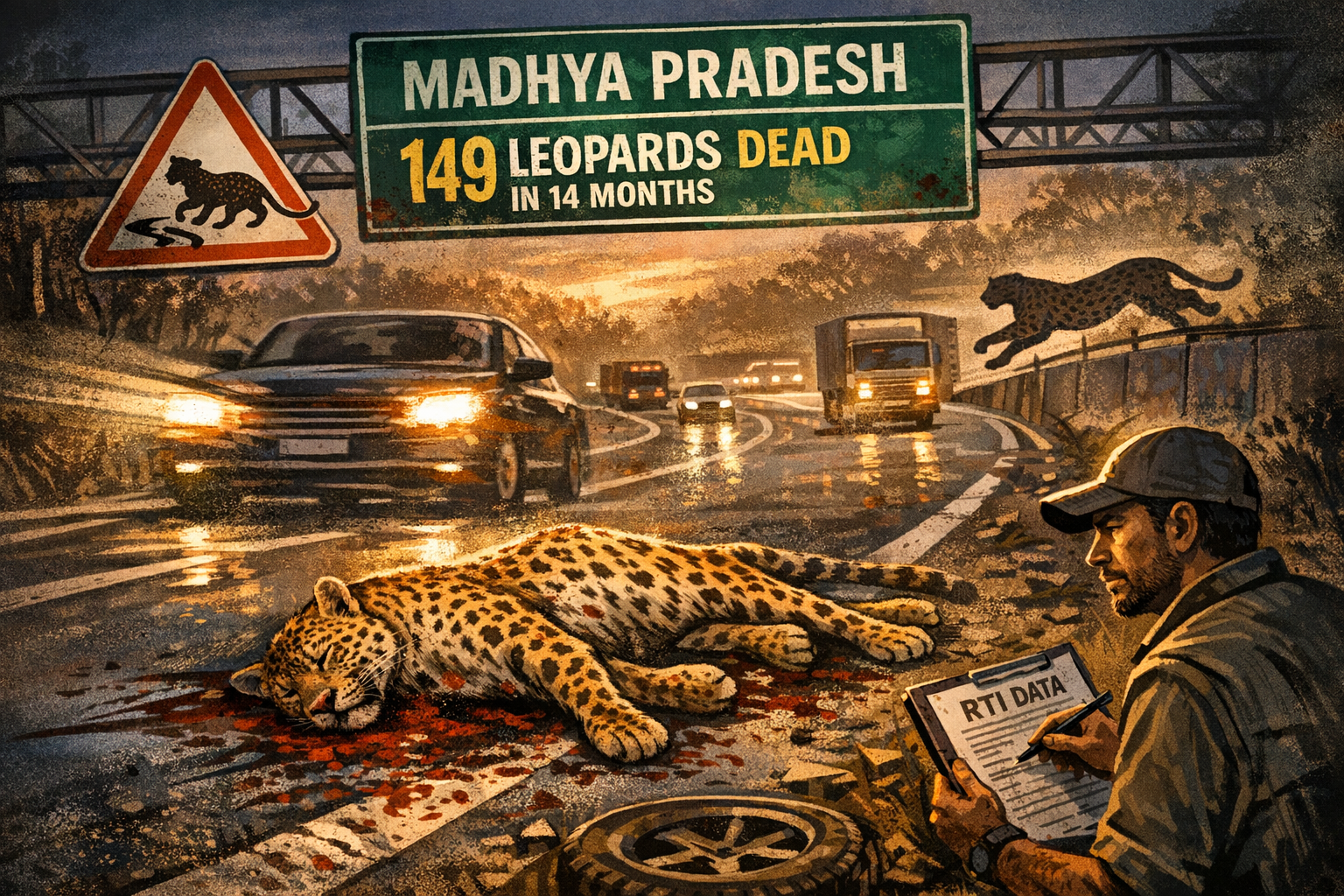
One hundred and forty-nine leopards died across Madhya Pradesh between January 2025 and the following fourteen months — a figure that emerged not from a government press release, but from a Right to Information query filed by wildlife activist Ajay Dube. The numbers have prompted immediate concern among conservationists, who say the scale of loss is inconsistent with a state that positions itself as one of India's foremost wildlife destinations. Dube described the figures as alarming and warned that the risks facing large carnivores in the region are being systematically underestimated.
Roads as the Leading Cause of Death
The Forest Department's own data identifies accidents as the single largest cause of leopard mortality. Road collisions account for 31 percent of all deaths, with 19 of those fatalities occurring on highways. This is a pattern consistent with what wildlife ecologists have observed across big cat habitats globally — as road infrastructure expands into or through forest corridors, animals attempting to cross are struck by vehicles, often at night when traffic speeds are highest and visibility is lowest.
Madhya Pradesh is threaded with national and state highways that cut through or border protected areas, reserve forests, and wildlife corridors. Leopards, unlike tigers, are highly adaptable and frequently move through semi-urban and agricultural landscapes — which means their exposure to road traffic is significantly greater. They do not confine themselves to core reserve zones. This behavioral flexibility, often cited as a strength of the species, becomes a liability when unplanned road networks fragment the landscape they depend on.
The Question of Acceptable Loss
Forest Department officials stated that the current mortality rate sits at approximately four percent, which they characterised as within acceptable limits. That framing deserves scrutiny. Acceptable limits in wildlife management are typically benchmarked against a population's reproductive rate — the idea being that mortality should not exceed the pace at which a population can replace itself. However, this calculation depends heavily on having reliable population estimates, and leopard census methodology in India remains inconsistent compared to the more structured protocols used for tigers.
Madhya Pradesh has long claimed significant leopard populations, but independent verification of those figures is rare. Without a credible baseline, the four percent figure offers limited reassurance. A four percent annual loss from a smaller-than-estimated population could represent genuine decline rather than sustainable attrition. The RTI process itself — rather than a proactive departmental disclosure — being the mechanism through which this data reached the public underscores a transparency gap that complicates independent assessment.
Infrastructure, Corridors, and the Policy Lag
India has made measurable progress in tiger conservation over the past two decades, but leopard welfare has not attracted equivalent institutional attention or dedicated funding. The species sits in a policy blind spot: too widespread to be treated as critically endangered, too often in conflict with human settlements to attract straightforward sympathy. Road mitigation measures — wildlife underpasses, speed restrictions in known crossing zones, reflective signage, and barrier fencing — exist in principle and have been implemented with some success in tiger corridors. Their extension to leopard movement routes has been slower and more uneven.
The Forest Department stated that efforts to reduce fatalities are underway, though no specifics were provided in the available information. For those efforts to be meaningful, they would need to include systematic mapping of high-mortality road segments, coordination with highway authorities, and enforcement of speed limits during night hours in forest-adjacent zones. These are not novel interventions — they are established practice in countries where large mammal road mortality has been taken seriously as a conservation and public safety issue simultaneously.
What the Numbers Signal for Broader Wildlife Policy
The leopard deaths in Madhya Pradesh are not an isolated administrative failure. They reflect a structural tension present across much of India's wildlife-rich heartland: development infrastructure expanding at a pace that conservation planning has not kept up with. Leopards, as apex predators, play a measurable role in regulating prey populations and maintaining ecological balance in the landscapes they inhabit. Their decline does not remain contained — it ripples through the food web.
Dube's RTI filing demonstrates the continued importance of citizen-led accountability mechanisms in conservation governance. The data it produced should now feed into a concrete policy response — not a reassurance that the numbers are within limits, but a documented plan to bring them down. Madhya Pradesh holds a genuine opportunity to lead on this. Whether it does will depend on whether the figures obtained through a transparency request become the basis for action, or simply a statistic that passes through the news cycle without consequence.